


Platforms · B2B · Ecosystems · August 2021 — May 2024
Integration Marketplace & Developer Experience
Led the product and team that connected Indeed with more than 400 ATS partners, turning a fragmented technical ecosystem into a journey employers and developers could understand.
Indeed had to work after the click
Indeed was evolving from a job search engine into a hiring marketplace. But many jobs still arrived through disconnected feeds and sent people into external applicant tracking systems. That broke the journey: job seekers repeated work, employers lost a clear view of applicants, and partners had to navigate a patchwork of tools and processes.
A three-sided platform
The product had to work for employers configuring their hiring stack, job seekers trying to apply without starting over, and ATS partners building the connections between them. I led the experience vision across Partner Home, Developer Home, documentation, the Integration Marketplace, and ATS Sync so those separate surfaces became one journey.
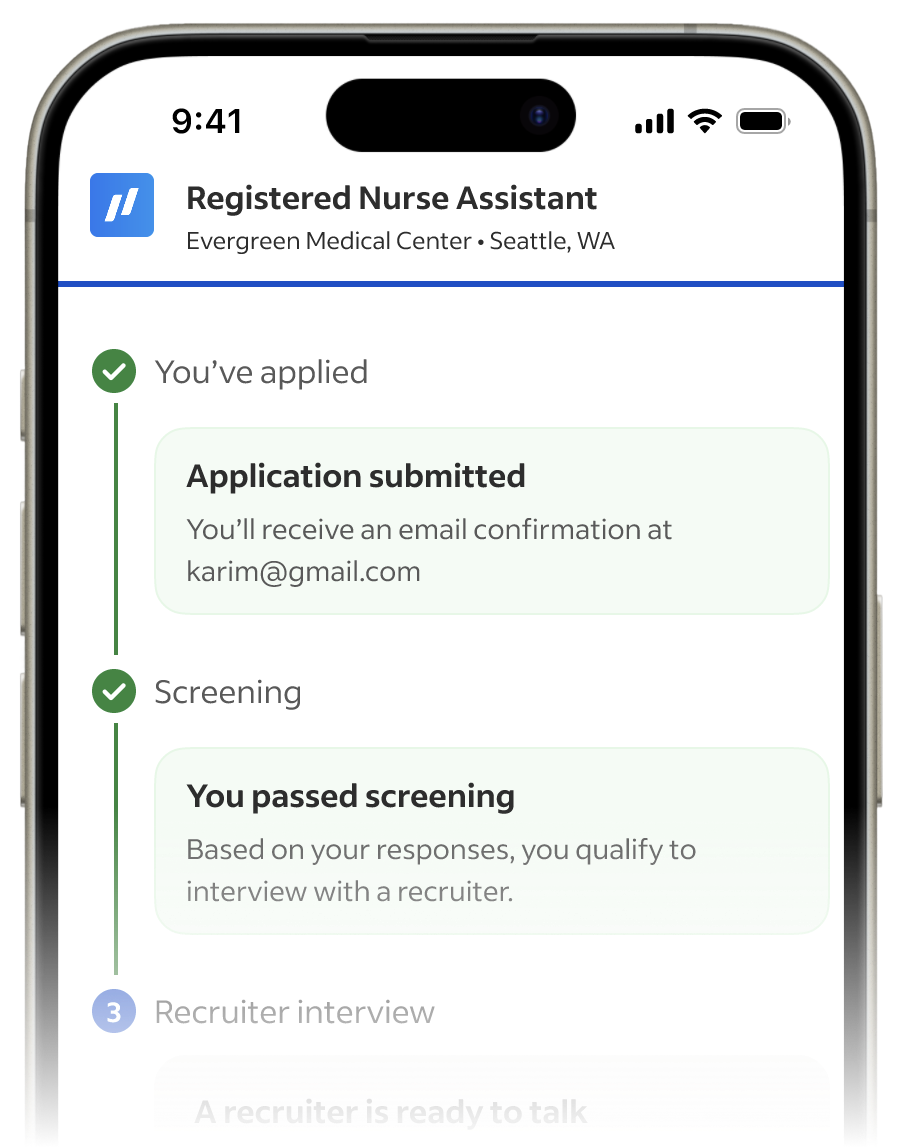
Selected screens
Swipe to explore · select for full view
Make a complex setup feel knowable
Installing an enterprise integration can involve administrators, credentials, test environments, permissions, and a move to production. We turned that work into an explicit sequence with progress, ownership, help, and safe checkpoints instead of leaving employers to stitch together product screens, emails, and documentation.
The craft decision
An early direction put internal data connectors at the center of the page. The language was technically accurate and still confusing, including to people inside Indeed. I proposed an alternative organized around what employers were trying to accomplish, with the connector details available where they mattered. In testing, people could not accurately describe the first version after 20 minutes. They could describe the simpler version after about 30 seconds.
Build the team around the system
The work began across siloed teams without a shared design organization. I used working prototypes to make the direction concrete, borrowed people to prove the opportunity, and then built a multidisciplinary team across product design, research, content, and design technology. We paired the customer experience with SDKs, test tooling, sample apps, documentation, and contribution reviews so more than 400 ATS partners could build against a common foundation.
Connected case studies
Related work
Leadership perspective
Further reading

Product strategy · B2B · Consumer
One product, different worlds: consumer, B2B, and enterprise design
Why changing the audience changes the product's promises, evidence, pace, and definition of simplicity.

Design leadership · 0→1 · Scale
What changes when a design team moves from 0→1 to scale
The practices that help a small team find the product can become liabilities when the product, organization, and customer base grow.